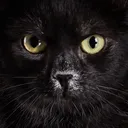
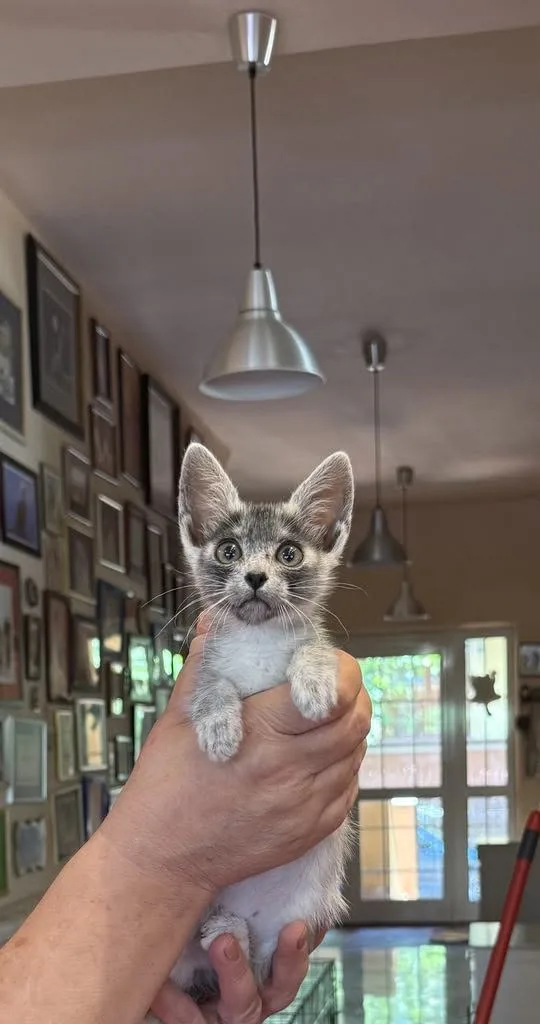
Very pale colouring
Paw pads and nose leather indicate whether the future base colour is black or blue-grey.
Mutation · Development · Genetics
A naturally occurring phenotype characterised by a distinctive salt-and-pepper body, pale contrast on the extremities and a striking transformation from very pale kitten to mature adult.
Geography of the phenotype
The documented foundation cats used for the Transylvanian programme came from western and sub-Carpathian Romania, including areas close to the Romanian–Hungarian border. A naturally occurring free-ranging cat population does not follow a political frontier, so occurrence of the same phenotype in neighbouring Hungary is biologically plausible. Project records also contain anecdotal reports from Ukraine, Poland, Croatia, Czechia and Slovakia. The full range has not yet been established by a systematic geographic or population-genetics study.
Visual signature
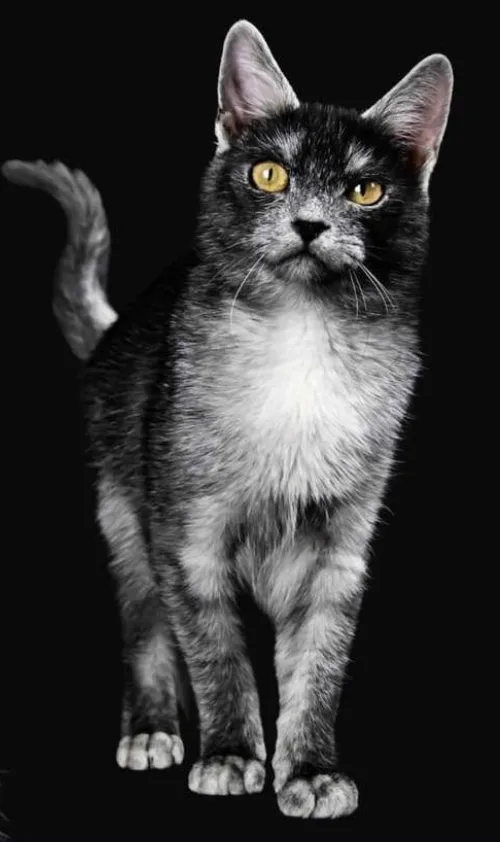
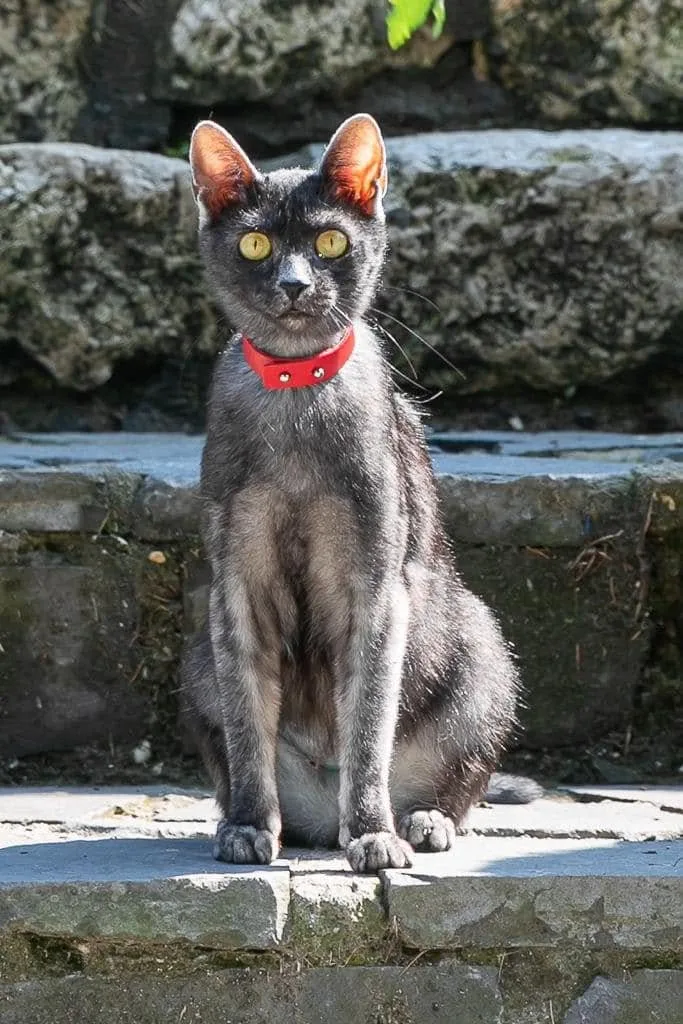
The mature coat shows a distinctive salt-and-pepper effect across the body, while the nose, ears, paws and tail carry much paler contrast. Pale ear furnishings and whiskers are desirable in the WCF-recognized standard.
Colour development
The transformation is one of the most distinctive features of the Carpati phenotype.
Paw pads and nose leather indicate whether the future base colour is black or blue-grey.
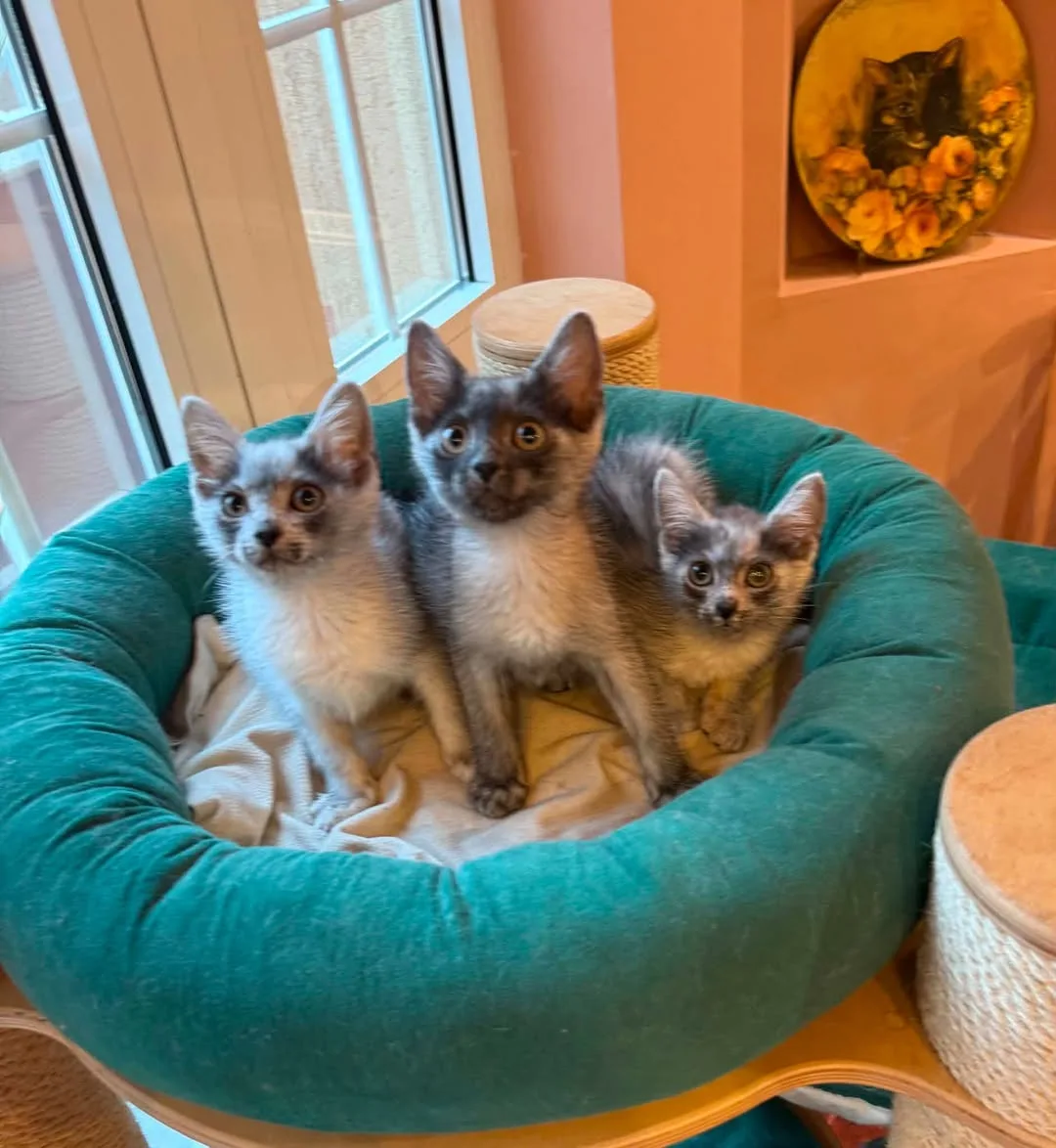
The ears, nose, paws and tail tip begin to separate visually from the body.
The “salt and pepper” effect becomes increasingly evident.
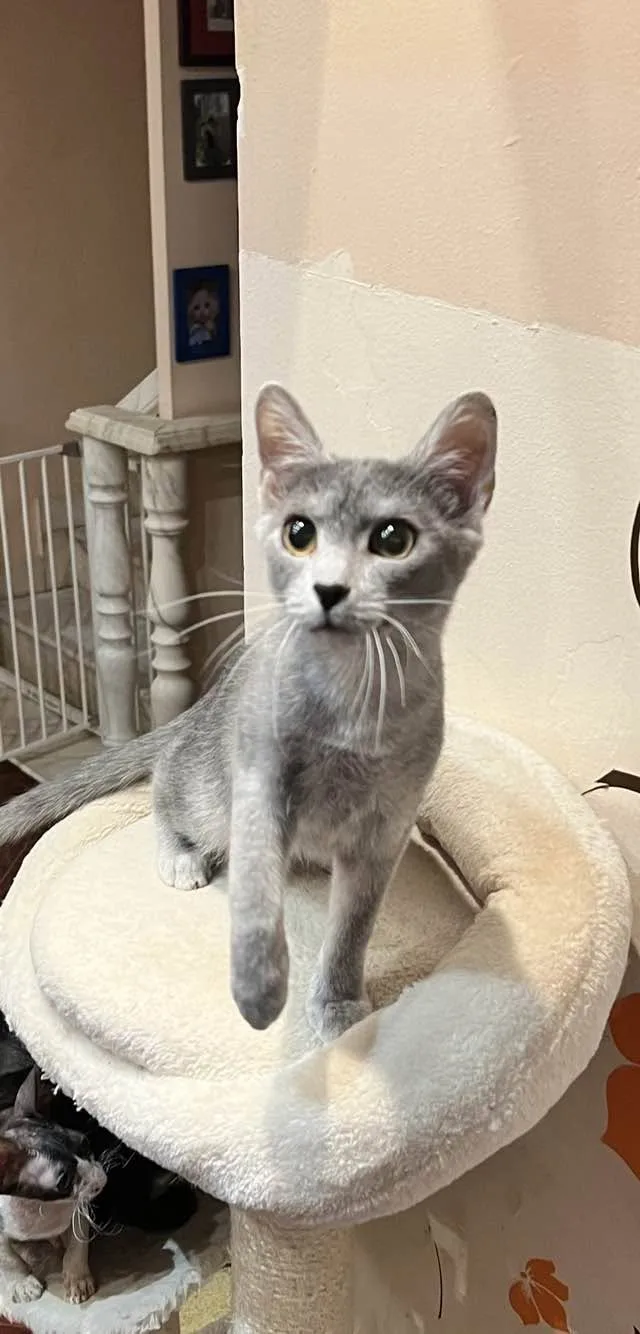
The complete colour is not considered finished until at least one year of age.
Scientific distinction
Conventional tested C-locus pointing variants were absent in the recovered archive. All 12 Paw Print Genetics CatScan reports record C/C — “Non-pointed coat”, with the tested Siamese, Burmese and albino variants absent. This supports excluding those tested variants in those cats, but it does not identify the Carpati cause. “Reverse-point” remains a visual description only.
Not the established Lykoi-type coat mechanism. The website uses “salt-and-pepper” for the visible coat effect and does not assign the Carpati phenotype to another known coat mechanism while its causal variant remains unresolved.
Gene still unknown. The causal Carpati gene or variant has not yet been identified.
Heat sensitivity remains a hypothesis. It should not be presented as established until supported by validated evidence.
Accepted colour
Black body colour with very pale grey hairs creating the salt-and-pepper effect. Pale grey appears on the nose, ear rims, paws and tail.
Accepted colour
Blue body colour with very pale hairs creating the salt-and-pepper effect. Pale grey appears on the nose, ear rims, paws and tail.
Registry status vs scientific status
On 23 August 2026, the WCF General Assembly approved the Carpati mutation for Championship competition with 67 votes out of 88, exclusively in the Transylvanian breed. That registry decision concerns the accepted breed phenotype; it does not identify the molecular cause. The public scientific record provides two clear anchors: a 2024 Animal Genetics paper co-authored by Prof. Leslie A. Lyons reports genotyping Karpati-pattern cats from Romania and the UK, and the University of Missouri Feline Genetics and Comparative Medicine Laboratory lists “Transylvanian cats – defining the Karpati coloration and pattern” as an active project. Neither source identifies the causal Carpati variant, and possible heat sensitivity remains a working hypothesis rather than established fact.
See the science page