Trusting
Foundation cats could be handled despite their previous feral lives.
Origin · Type · Temperament
The Transylvanian was developed by Beverly Elian from a specific type she identified among naturally occurring cats exhibiting the Carpati mutation in western and sub-Carpathian Romania. Project observations suggest that the Carpati phenotype may have a broader sub-Carpathian distribution, but that geographic record is anecdotal rather than scientifically mapped. Beverly’s decision to select this particular Romanian type and develop it into a consistent breed was entirely her own. Selection focused on type, temperament, health and the characteristic Carpati mutation.
Start here
Read the canonical plain-language explainer covering the Transylvanian, the Carpati mutation, recognition and the current scientific boundaries.
Mutation and breed are related, but not interchangeable.
The starting point
Project observations suggest that cats showing the Carpati phenotype may occur along a broader sub-Carpathian belt. Those observations are anecdotal and have not been established by a systematic population study. Beverly Elian’s decision was narrower and deliberate: to work from a particular Romanian type and select it consistently for conformation, temperament and breed identity.
This distinction matters. Reports of the Carpati phenotype from Romania, Ukraine, Poland, Hungary, Croatia, Czechia, Slovakia or elsewhere do not by themselves make those cats Transylvanians. The Transylvanian is the result of a defined Romanian breeding programme, with a standard and a selection objective.
A natural foundation
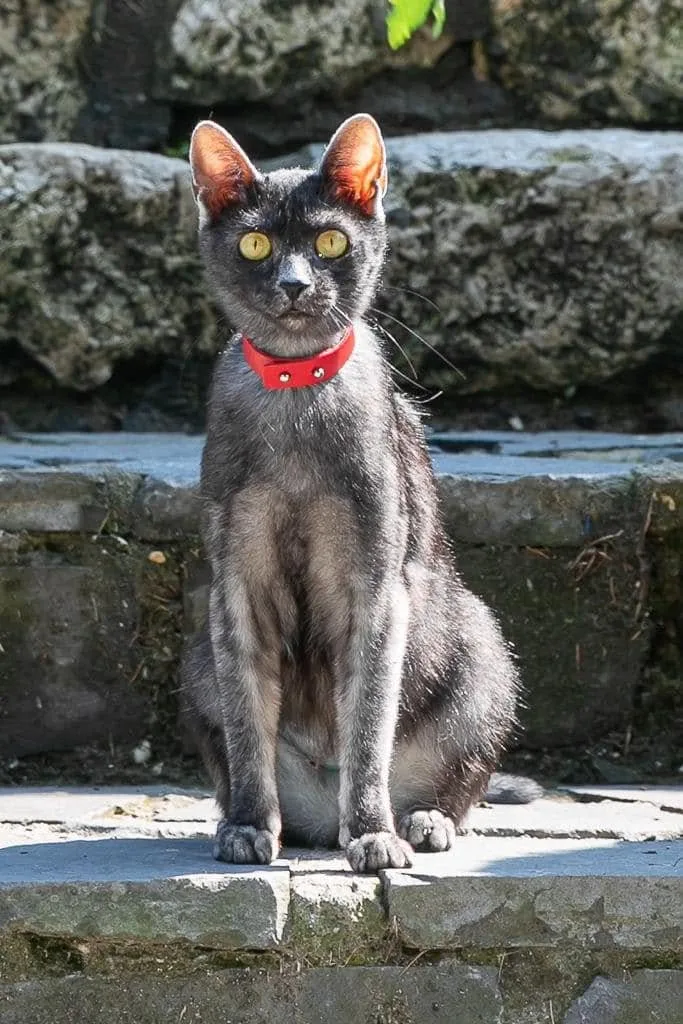
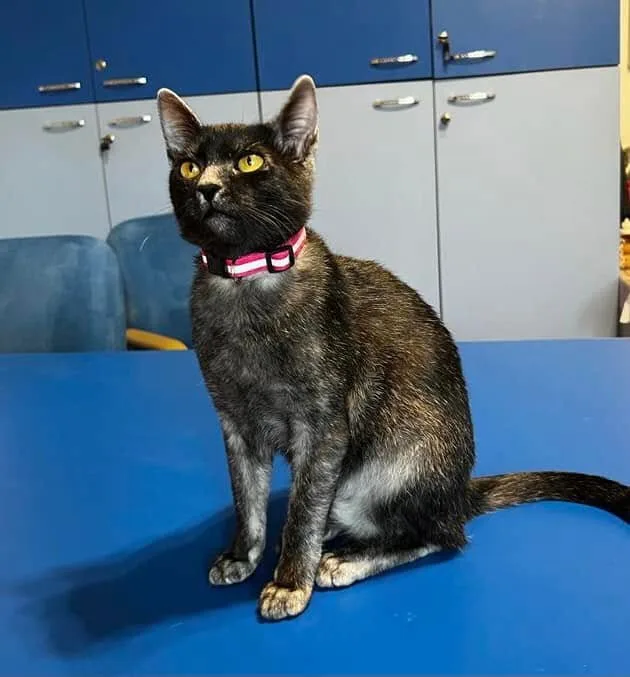
The breed-recognition project describes a medium-sized, well-muscled cat with slender bone, relatively high legs and a short, dense coat. The expression is elegant rather than coarse, with a modified wedge head, slightly oblique oval eyes and the distinctive pale contrasts of the Carpati mutation.
The breeding objective has been preservation rather than exaggeration: retain the natural elegance of the foundation type, protect health and welfare, and document the breed scientifically as it develops.
Temperament
The recognition presentation records an unusually trusting temperament in the foundation cats, including cats rescued from feral conditions. Subsequent Transylvanian-to-Transylvanian generations have continued to show gentle, kind and non-aggressive behaviour.
Foundation cats could be handled despite their previous feral lives.
Non-aggressive temperament has remained a recurring feature of the programme.
The breed is described as forming strong bonds with its human family.
Selection is for a stable companion as well as a distinctive phenotype.
At a glance
A living legacy
That distinction is the key to understanding the Transylvanian accurately.
Next: the Carpati mutation