Evidence register · Version 2.1

Claims should lead back to evidence.

A source register for the Transylvanian Breed Project: official WCF records, peer-reviewed research, institutional research pages, recovered laboratory reports, project-held documents and independent media.

Primary sources · independent sources · project records · last reviewed 22 August 2026

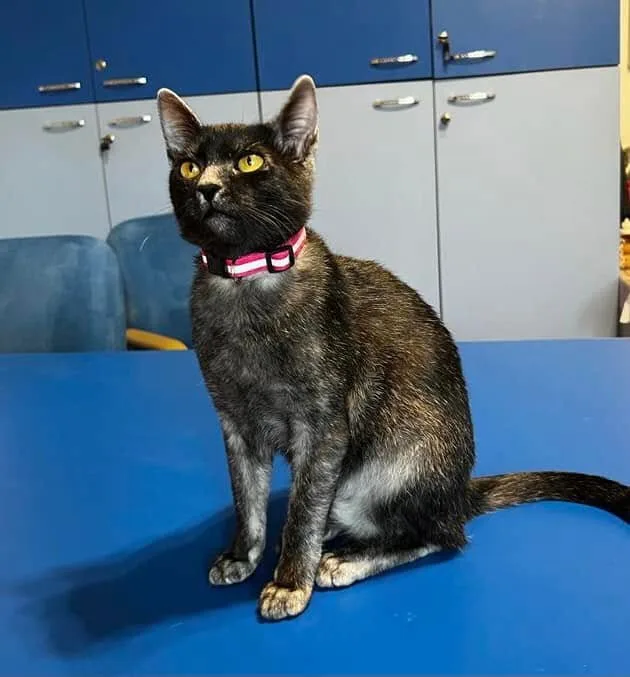
Black Carpati Transylvanian cat showing natural breed type

How this register works

Not all evidence has the same status.

Each item is labelled so readers can distinguish an official institutional source from peer-reviewed research, a laboratory record held by the project, a project submission, or independent journalism. A project-held document can establish what the project recorded or submitted; it is not presented as independent scientific validation.

Official / institutional Peer-reviewed Laboratory record Project-held document Anecdotal / field record Independent media

01 · WCF record

Recognition and official status.

Official World Cat Federation sources are preferred whenever a public WCF record exists.

Official WCF

WCF archive — “New breed in the process of recognition, class 23: Transylvanian Cat”

Records that the breed was presented for assessment in Bucharest on 10 October 2021 and describes the Transylvanian as a new breed in the recognition process.

Open WCF source
Official WCF

WCF EMS Code — Transylvanian · TRA-non

The current public EMS document lists Transylvanian under Provisionally Recognized Breeds with code TRA-non.

Open WCF EMS
Published primary extract

WCF General Assembly agenda · item 17.3.8

The project-held WCF General Assembly agenda contains “Recognition of the breed Transylvanian”. It states that the WCF Judges- and Pedigree Registration Commission proposes full recognition and that the breed is provisionally recognized at the time of the agenda.

The site publishes a two-page extract containing the WCF General Assembly cover and agenda item 17.3.8. The official post-vote WCF record will remain the controlling source once published.

Open agenda extract

02 · Research & genetics

Independent scientific sources.

The research record is kept narrower than the breed story: what a source actually demonstrates is stated explicitly.

University of Missouri

99 Lives — Transylvanian cats / Karpati

The Feline Genetics and Comparative Medicine Laboratory lists “Transylvanian cats – defining the Karpati coloration and pattern” among active projects.

Open Missouri source
University of Missouri host

What breeds need what genetic tests?

In guidance published on the University of Missouri laboratory website, Dr. Leslie A. Lyons explicitly names Transylvanian among new breeds for which genetic tests should be monitored to document healthy foundation lines. The page states that these recommendations are Dr. Lyons’s personal opinions.

Open guidance
Peer-reviewed

Anderson et al. — salmiak / Karpati comparison

The paper genotyped one Karpati-pattern domestic cat from Romania and one from the UK and found the newly identified salmiak allele wsal absent in both. Prof. Leslie A. Lyons is a co-author. The paper does not identify the cats as Transylvanian or validate the breed.

WileyPubMed
Direct public statement

TVR interview — Prof. Leslie A. Lyons

A TVR report includes Prof. Lyons discussing genetic testing and genome sequencing carried out on the cats. This is direct public testimony, distinct from peer-reviewed publication.

Open TVR report
Institutional

VetAgro Sup · Prof. Marie Abitbol

VetAgro Sup identifies Prof. Marie Abitbol as a genetics teacher-researcher at its Lyon Veterinary Campus. Her published institutional profile includes feline whole-genome sequencing among highlighted projects.

Open VetAgro Sup profile
Contemporaneous research record

Karpati DNA sampling call · Abitbol / Lyons

A public sampling notice requested DNA from cats showing the Karpati phenotype for Prof. Marie Abitbol’s research to identify the gene. It described her as working “in tandem” with Prof. Leslie Lyons and encouraged owners to send samples to both teams. The notice was posted by Anthony Nichols; GCCF records independently confirm Nichols as a Genetics Committee member in the relevant period. The notice is evidence of an active coordinated research effort, not of a published causal-gene result.

View archived notice

03 · Project & laboratory documentation

What the project can now show directly.

The recognition submission and the original laboratory certificates are presented separately. The laboratory reports support individual test results; they do not independently validate the breed.

Project-held · 2026

Breed Recognition Presentation

The presentation states that all foundation cats were tested for more than 120 genetic traits and health conditions and identifies the programme’s health and preservation objectives.

A rights-cleared public edition is in preparation.

Project standard · 2026.1

Proposed Transylvanian Breed Standard

The public standard page records conformation, coat, accepted Black and Blue Carpati expressions, faults, disqualifications and scale of points.

View standard page Download PDF
Recovered originals

Paw Print Genetics CatScan archive

Twelve original seven-page CatScan certificates from 2022–2023 have been verified and prepared as public copies. Human owner names and cat microchip numbers are redacted; laboratory number, cat identity, report date and all test results remain visible.

View the 12 reports

Paw Print Genetics · CatScan

Recovered report register

All twelve reports identify Paw Print Genetics, Spokane WA. All twelve report C/C — Non-pointed coat at the C locus. The full PDFs are provided so the complete health and trait results — including any carrier or “no result” entries — remain visible and cannot be reduced to a selective summary.

CatReport dateLab #C-locusPDF
Azuga30 May 2022308406C/C · Non-pointedOpen PDF
Cozia30 May 2022308405C/C · Non-pointedOpen PDF
Dunareana30 May 2022308404C/C · Non-pointedOpen PDF
Negoiu30 May 2022308425C/C · Non-pointedOpen PDF
Nemteana30 May 2022308401C/C · Non-pointedOpen PDF
Silva30 May 2022308424C/C · Non-pointedOpen PDF
Timisoreana30 May 2022308407C/C · Non-pointedOpen PDF
Ursus30 May 2022308426C/C · Non-pointedOpen PDF
Engel Gold6 Mar 2023383933C/C · Non-pointedOpen PDF
Erstreller6 Mar 2023383932C/C · Non-pointedOpen PDF
Focal Banger6 Mar 2023383930C/C · Non-pointedOpen PDF
Skol6 Mar 2023383931C/C · Non-pointedOpen PDF

Laboratory boundary: Paw Print’s reports state that results relate only to the items tested, are not diagnostic tests and are not breed-identification tests. The 2026 project presentation’s “120+” count remains attributed to that presentation rather than independently recalculated from the certificates.

04 · Geographic & breeding field record

Useful observations, labelled for what they are.

The project keeps anecdotal geographic observations and public breeder activity separate from scientific evidence. These records can document reported occurrence and an active breeding population; they do not establish prevalence, population structure or genetic causation.

Project observations

Possible broader sub-Carpathian distribution

Breeders, owners and collaborators have reported or observed cats showing the Carpati phenotype in Romania, Ukraine, Poland, Hungary, Croatia, Czechia and Slovakia. The project currently interprets these reports as consistent with a broader sub-Carpathian distribution. This has not been tested through a systematic geographic or population-genetics survey.

Read the geographic note
External cattery record

GreyHeart Transylvanian Cattery · Hungary

GreyHeart publicly documents Transylvanian breeding in Hungary and dated appearances with its cats at WCF shows including Rijeka and Timișoara in February 2025. It is cited here as evidence of documented breeding and show activity outside the founding cattery, not as a scientific or breed-authority source.

Open GreyHeartShow archive

05 · Independent public record

Television and news coverage.

The Media & Press archive links directly to original TVR, PRO TV, Observator / Antena 1, Digi24 and Kanal D sources wherever surviving primary links are available.

Evidence boundary

What this register does not claim.

  • No peer-reviewed paper currently validates the Transylvanian breed standard or WCF recognition.
  • No peer-reviewed publication has yet identified the causal Carpati variant.
  • The recovered CatScan reports demonstrate testing and individual results; they do not constitute a genetic definition or validation of the breed.
  • The project presentation’s “120+” statement remains attributed to that presentation; this site does not manufacture an independent count by reinterpreting the laboratory panels.
  • Historic media wording may not reflect the current WCF status; current status should be taken from official WCF records.
Documents & Sources · register version 3.2Last reviewed: 22 August 2026