Short answer: The Transylvanian is a Romanian cat breed developed by Beverly Elian from a specific type she identified among naturally occurring cats exhibiting the Carpati mutation in western and sub-Carpathian Romania. The mutation itself predates the breed. Project observations suggest a possible broader sub-Carpathian distribution of the phenotype, but that geographic record is anecdotal and has not been scientifically mapped. The breed is the result of a deliberate selection programme for type, temperament, health, coat texture and consistent expression of that natural trait.
That distinction is the key to understanding the Transylvanian. The Carpati mutation was not created in a cattery. Project observations suggest that cats showing it may follow a broader sub-Carpathian distribution. These geographic observations are anecdotal and have not been established by a systematic population study. The Transylvanian breed, by contrast, exists because Beverly Elian chose a particular Romanian foundation type, defined the desired conformation and temperament, and developed it through selective breeding and documentation.
Natural foundations, deliberate breed development
The Transylvanian is sometimes described simply as a “natural breed”, but that phrase needs precision. Its foundations are natural: the defining Carpati trait and the cats from which the project began were found in naturally occurring populations rather than created by crossing established pedigree breeds to manufacture a new appearance.
The breed itself, however, was not a pre-existing pedigree population waiting to be registered. Beverly Elian made the independent decision to establish a new breed from a specific type found in western and sub-Carpathian Romania. Her selection was not based on colour alone. It focused on a coherent overall cat: body, head, bone, coat, temperament, health and the characteristic Carpati expression.
This is why not every cat carrying the Carpati mutation is a Transylvanian. A cat may show the natural mutation without belonging to the Transylvanian breed-development programme or meeting its type. The same distinction is important for researchers, judges, breeders and journalists: the geographic range of the mutation is not the geographic definition of the breed.
For the project’s fuller historical account, see The Breed and History & Recognition.
What is the Carpati mutation?
“Carpati mutation” is the term used by the project for the inherited trait that produces the breed’s unusual colour development and distinctive salt-and-pepper appearance. The documented Transylvanian foundation cats came from western and sub-Carpathian Romania, including areas close to the Romanian–Hungarian border. Free-ranging populations do not follow political boundaries, making occurrence in neighbouring Hungary biologically plausible. Project records also contain anecdotal reports from Ukraine, Poland, Croatia, Czechia and Slovakia. Prevalence and geographic boundaries have not been scientifically mapped.
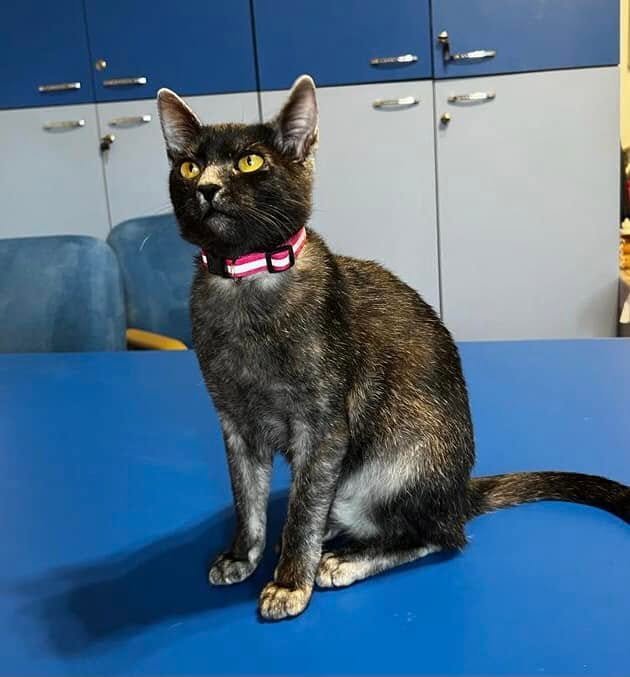
Visually, the mature coat has a distinctive salt-and-pepper effect over the body, with pale contrast especially evident on the ears, nose and mask, paws, legs and tail. The project colour expressions are Black Carpati and Blue Carpati.
The exact causal gene or variant has not yet been identified. For that reason, this website does not present the inheritance as definitively dominant or recessive. The trait has also been described as possibly heat-sensitive, but that remains a hypothesis rather than an established mechanism.
The recovered Paw Print Genetics CatScan archive now provides a more precise statement: all 12 reports record C/C — Non-pointed coat, with the tested Siamese, Burmese and albino C-locus variants absent. This supports excluding those conventional tested pointing variants in those cats, but it does not identify the Carpati cause. “Reverse-point” remains a visual description only.
A detailed explanation of the trait, its geography and the open genetic questions is maintained on The Carpati Mutation.
A striking development from kitten to adult
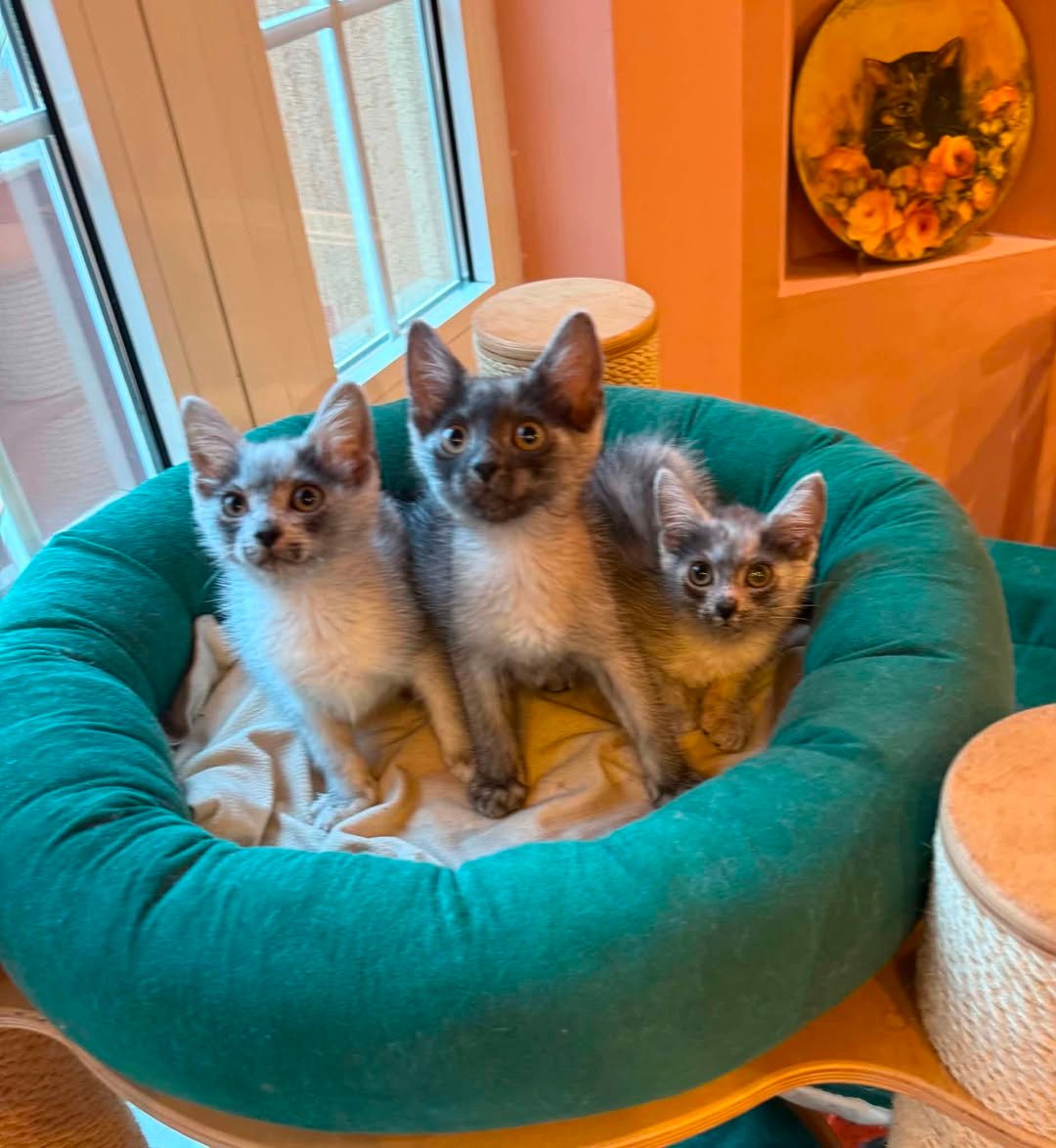
One of the most unusual aspects of the Transylvanian is how much the coat changes during the first year. Kittens are born very pale. The nose leather and paw pads can indicate whether the eventual expression will be black or blue-grey. Around two months of age, stronger contrast begins to appear first on the extremities — particularly the ears, nose, paws and tip of the tail — while the body’s salt-and-pepper effect develops progressively.
The WCF-recognized standard notes that full colour is not finished until at least one year of age. This means that evaluating a young Transylvanian requires an understanding of development rather than expecting a kitten to look like a miniature adult.
What does a Transylvanian look like?
The breed is medium-sized and of medium length, with a combination that can appear almost contradictory at first glance: slender bone but powerful muscle. The dense coat can make the cat look more robust than the underlying frame actually is. The overall impression should be athletic, balanced and natural rather than exaggerated or heavy.
The head is a modified wedge with slightly rounded upper contours and is longer than broad. The profile is slightly concave, without a bump or stop. The chin is firm and the muzzle pronounced, with a visible whisker break. Ears are medium in size, broad at the base and upright, while the eyes are medium, oval and slightly oblique, with yellow-to-hazel tones preferred in the WCF-recognized standard.
The coat is short with a slight lift. The undercoat is very soft and dense, while the guard hairs are coarser. This texture is part of the breed impression; the Transylvanian is not defined by colour alone.
The full conformation, faults, accepted colours and scale of points are set out on the Breed Standard page.
Black Carpati and Blue Carpati
In Black Carpati, the body is black with very pale grey hairs creating the salt-and-pepper effect and pale grey contrast on the nose, ear rims, paws and tail. Nose leather and paw pads are black.
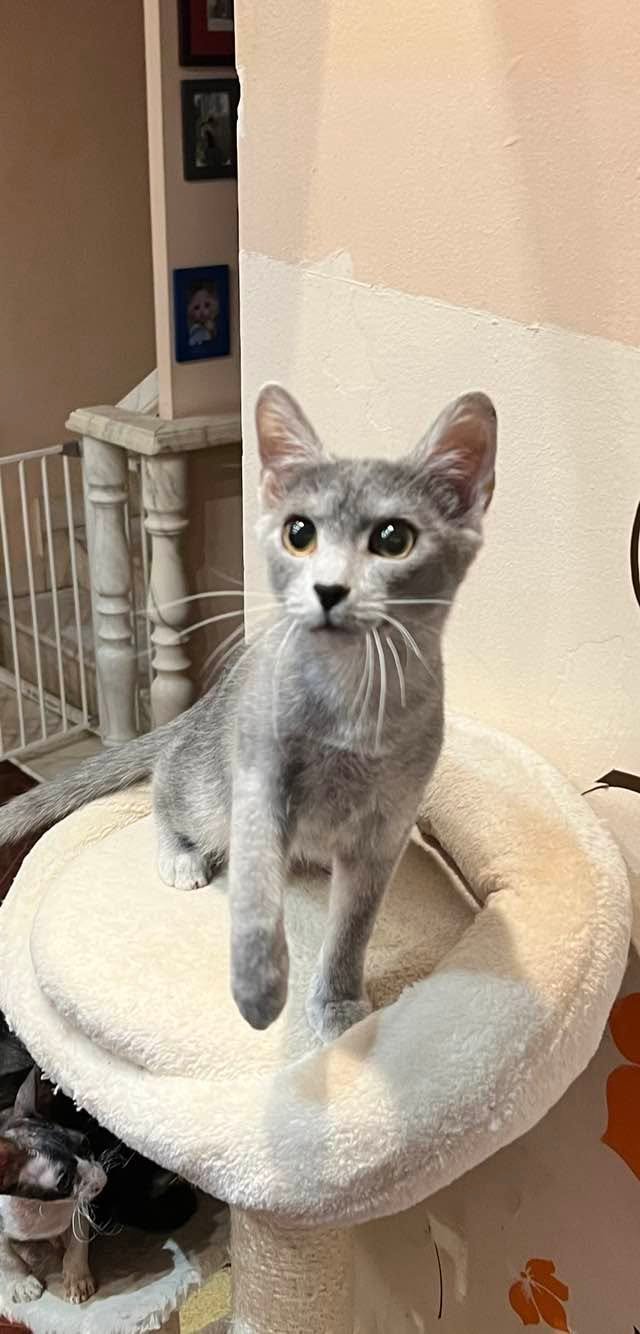
In Blue Carpati, the same basic visual logic appears on a blue background: very pale hairs creating the salt-and-pepper effect over the body and pale contrast on the extremities, with blue-grey nose leather and paw pads.
Temperament was part of the selection from the beginning
The Transylvanian project has consistently treated temperament as part of breed type, not as an afterthought. The 2026 breed-recognition presentation records the cats as naturally gentle and non-aggressive. Even foundation animals rescued from feral conditions were described as trusting and relatively easy to handle, and subsequent Transylvanian-to-Transylvanian generations continued to show gentle, people-oriented temperaments.
That matters because the breed-development objective is not merely to preserve an unusual mutation. It is to establish a healthy, predictable companion animal with a coherent physical and behavioural identity.
Who created the Transylvanian breed?
Beverly Elian is the creator and breed developer of the Transylvanian. She is a WCF Allbreed Judge, Acting President of MagnifiCats and a former Head of the WCF Judges- and Pedigree Registration Commission. Her role was decisive: she identified the particular Romanian type she wanted to preserve, chose the foundation cats, selected subsequent generations and developed the breed-standard work used in the WCF recognition process.
This is separate from the discovery or study of the Carpati mutation itself. The mutation was already present in natural cat populations. The choice to transform one specific Romanian foundation type into a consistent new breed was Beverly’s decision and breeding work.
Read more about her role on the Beverly Elian page.
The scientific record: public research anchors
The public institutional record provides a direct, verifiable link: the University of Missouri Feline Genetics and Comparative Medicine Laboratory lists “Transylvanian cats – defining the Karpati coloration and pattern” among its active projects. Prof. Leslie A. Lyons is also a co-author of a 2024 Animal Genetics paper that genotyped Karpati-pattern cats from Romania and the United Kingdom.
These sources establish research involvement with Karpati / Transylvanian cats. They are not presented here as evidence that Prof. Lyons authored or scientifically validated the Transylvanian breed standard or WCF recognition.
The project archive records that genetic samples were sent to Prof. Marie Abitbol. No public peer-reviewed Transylvanian-specific output from that work is cited here at present. The 2026 breed-recognition presentation states that all foundation cats were tested for more than 120 genetic traits and health conditions.
There are therefore two parallel goals: to document and understand the genetic basis of the Carpati mutation, and to develop the Transylvanian responsibly as a breed. The first scientific question remains open: the precise causal gene or variant has not yet been identified.
The current evidence status is kept deliberately explicit on Science & Genetics.
Recognition: full WCF Championship status
On 23 August 2026, the WCF General Assembly approved full recognition of the Transylvanian breed with 71 votes out of 83. In a related decision, the Carpati mutation was approved for Championship competition with 67 votes out of 88, exclusively for the Transylvanian. This registry decision recognises the breed phenotype and competition status; it does not identify the causal DNA variant, which remains under scientific study.
Recognition and the importance of precise language
Breed recognition is a process, and its terminology changes as formal stages are completed. This article is designed to remain useful beyond any single vote or meeting, so the current official WCF status is maintained separately on History & Recognition.
The same principle applies to historical media reports and older cached search summaries. Broadcasters have followed the Transylvanian since at least 2023, but some older headlines used recognition language that reflected the information available at the time. The project preserves those reports as historical evidence while keeping current terminology on the authoritative pages of this website.
Independent coverage from TVR, PRO TV, Antena 1 / Observator, Digi24 and Kanal D is documented in the Media & Press archive. Particularly important is the February 2026 TVR report, which brought together statements from Beverly Elian, Alexandru Elian and Prof. Leslie Lyons and discussed genetic testing, sequencing and the recognition process.
So, what makes a Transylvanian a Transylvanian?
It is not one isolated feature. A Transylvanian combines:
- a defined Romanian foundation and selective-breeding history;
- the naturally occurring Carpati mutation;
- a medium, athletic body with slender bone and strong musculature;
- a characteristic modified-wedge head and balanced expression;
- a short, dense, slightly lifted coat;
- Black Carpati or Blue Carpati colour expression;
- a gentle, trusting temperament selected across generations; and
- documented health testing and continuing scientific investigation.
Most importantly, the breed should not be confused with every naturally occurring cat that happens to show the Carpati mutation. The mutation is a natural regional phenomenon; the Transylvanian is a defined Romanian breed created through deliberate selection for a complete type.
The Carpati mutation existed in nature. The Transylvanian breed exists because a particular Romanian type was recognised, selected, standardised and developed.
Sources and further reading
This article is based principally on the Transylvanian Breed Recognition Presentation prepared for WCF in 2026, the breed-development record maintained by the project, and the current technical pages of this website. A public edition of the presentation will be added to the resource library after all image-rights issues have been cleared.
- The Transylvanian Breed — origin, type and temperament
- The Carpati Mutation — geography, development and genetics
- Transylvanian Breed Standard
- Science & Genetics
- History & Recognition
- Independent Media & Press archive
- Documents & Sources — evidence register
- World Cat Federation archive, 10 November 2021
- Wikidata: Transylvanian cat (Q141147321)
- TVR / TVR Info, 22 February 2026
- Știrile PRO TV, 21 February 2026
Editorial note: Genetics and recognition status are living areas of the record. This page will be updated when validated scientific results or formal WCF decisions change the evidence.